

Rosh Hashanah 2026: New Years and Signs
Error: Contact form not found.

 by Jeremy Rosen

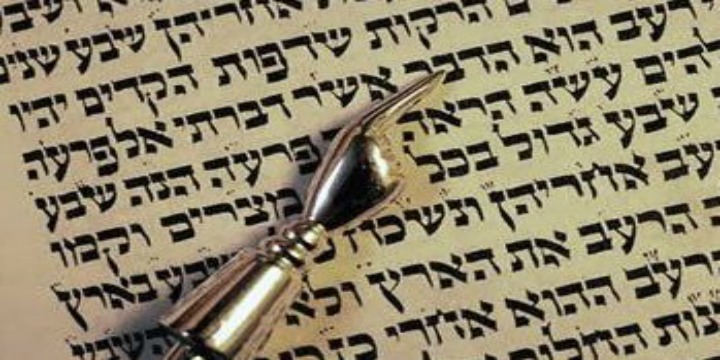
A Torah scroll. Photo: Wikimedia Commons.
Rosh Hashanah is the most multifaceted of our festivals. The Torah itself doesn’t call it a New Year or Chag (festival). It is simply called Yom Hazikaron, the Day of Remembrance. But we’re not told who is remembering whom. Is it God remembering us or us remembering God?
The Torah also talks about it being a day of truah, which we understand to refer to blowing the shofar. This was the Biblical system of communication, for alarm as well as celebration. It is emblematic of the Jewish people, sounding for joy and pain. The shofar (not to be confused with temple trumpets) is the one object that has survived for 3,000 years and still to this very day, symbolizes and conjures up our past — and the good and the bad in our history.
The issue of the calendar is central to this festival. There were many different calendars in Mesopotamia, solar and lunar. Indeed, the names of the Jewish months are mainly taken from Mesopotamia. What we call Rosh Hashanah, the head of the year, comes in the seventh month of Tishrei. But the First Day of the month of Tishru (in Akkadian/Sumerian) was the King’s Day. It was an awesome occasion. Many pagan cultures practiced human sacrifice on this day, even one of the Kings’ sons would be offered as a gift to the gods.
This may be the point of the story of the Akeda, the Binding of Isaac, which we read from the Torah on Rosh Hashanah.
The Torah initially itemized only Tishrei as the ninth month of the year. It’s not until the Mishnah about a thousand years later that other New Years are mentioned (Mishna 1:1). There are New Years of months (Shemot 12:2), Sabbaticals, and Jubilees, a New Year for trees and vegetables and of course lots of disagreements amongst rabbis.
Only in the second Mishnah does it say that “On Rosh Hashanah every person in the world passes before God, like sheep, as it says God has created every human being and understands what’s in their hearts.” This then is the basis of calling Rosh Hashanah, Yom HaDin, a day when we are judged.
Once upon a time calendars went according to the reigns of kings. When in Talmudic times annual calendars became more general, they would reckon dates back to significant events, as indeed we all do today in our different cultures. Judaism adopted what it believed then was the start of the world or Adam and Eve. And we now count the years starting at Rosh Hashanah.
That’s the serious side of Rosh Hashanah. But there is another which is completely different. And this is the fact that Rosh Hashanah is also a happy day, and it’s a day when we start off our meals with apple and honey wishing ourselves a sweet year ahead. And this leads us into another aspect of Rosh Hashanah. The question of superstition or to put it in the language of the Talmud whether “signs have significance or not.” The Hebrew word is simanim (which can also mean acrostics) and the Talmud is divided between those who think such things are significant and those who think not.
As with many things in the Talmud, we are left with different opinions and no definitive conclusions. And each community has its own, shall we say, idiosyncrasies or borrowing from outside, which all adds color.
Which aspect of Rosh Hashanah appeals to you more? Perhaps all of them! But it is up to us to enjoy the fun of the holiday, as well as its darker tones.
May you have a sweet, happy, healthy, and peaceful Shana Tovah.