






Turkey Set to Boost Diyanet Budget by Over 30% as Religious Agency Expands Influence Abroad
Error: Contact form not found.

 by Ailin Vilches Arguello

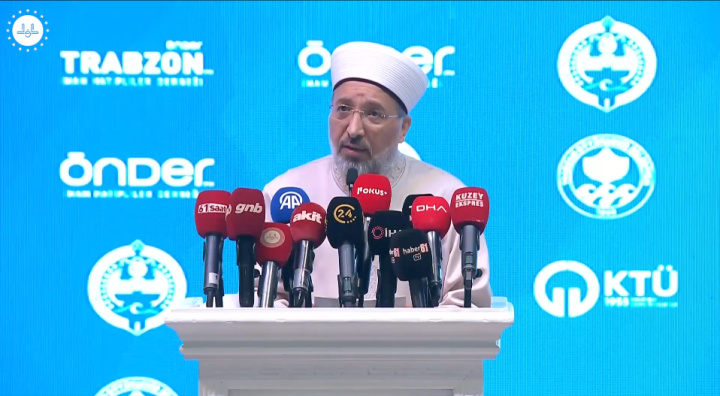
Safi Arpaguş, president of Religious Affairs Directorate (Diyanet). Photo: Screenshot
Turkey’s government is expected to allocate almost $5 billion to its controversial Religious Affairs Directorate (Diyanet) next year, marking a substantial budget increase that has raised fresh concerns over the expanding power and influence of an agency whose reach extends from religious life at home to communities abroad.
According to budget figures published this month, the Diyanet is expected to receive 229.1 billion lira ($4.73 billion) in 2027, a 31.4 percent increase over its 2026 budget that would give the powerful agency more funding than Turkey’s ministries of interior, foreign affairs, energy, trade, culture, and industry.
Political opposition figures and academics have sharply criticized the proposed spending, warning over the Diyanet’s growing financial reach as its annual budget for goods and services alone exceeds that of 79 of Turkey’s 126 universities.
The proposed budget — reported by Turkish media and Nordic Monitor, a news site run by the Stockholm-based Nordic Research and Monitoring Network — has yet to receive final approval from Turkey’s parliament, meaning the figures could change before the spending plan is formally adopted.
Together, the Diyanet and the Turkey Diyanet Foundation employ roughly 150,000 people in religious roles at home and abroad, with personnel costs expected to account for about 85 percent of the agency’s projected spending next year.
Beyond Turkey’s borders, the Diyanet maintains a broad international network of mosques, religious institutions, and personnel, giving the agency a significant presence in Muslim communities around the world.
Among its operations abroad, the Diyanet sends religious officials and attachés to dozens of countries, oversees theology and religious education programs, and organizes religious and charitable initiatives for Turkish citizens and Muslim communities.
In Germany, for example, the agency has one of its strongest international presences, operating through the Turkish-Islamic Union for Religious Affairs (DITIB), the country’s largest mosque network, which oversees more than 900 mosque communities.
The Diyanet is also set to broaden its international footprint next year, adding or expanding religious attaché posts in Boston, Miami, Montreal, Afghanistan, and Kazakhstan.
In recent years, the agency has faced mounting scrutiny in several countries — including Germany, France, the Netherlands, and Lithuania — after Turkish imams sent abroad were investigated over allegations that they surveilled critics of the Turkish government within diaspora communities.
Turkish officials have dismissed the allegations as unfounded, accusing Western governments of discriminating against Turkish and Muslim communities.
As concerns over Ankara’s religious influence abroad grow, France has stopped accepting Turkish government-funded imams since last year.
Germany has also announced plans to gradually replace Turkey-trained imams with clergy educated domestically, calling for mandatory certification for all imams amid a surging wave of antisemitism — including multiple cases of religious leaders promoting anti-Jewish violence.
With more than five million Muslims living in Germany, many turn to imams for spiritual guidance.
Most of these religious leaders are trained abroad — especially in Turkey — and brought to local mosques by large Muslim organizations on multi‑year contracts, shaping the religious education and messaging that reaches the community.
Now, Germany is seeking to train more imams domestically and reduce its reliance on foreign-trained clergy, a move that could further weaken the Diyanet’s longstanding role in shaping religious life among Turkish Muslims in the country.
Last year, amid a rising wave of anti-Jewish hate crimes, the German government urged the country’s main mosque association to publicly break with Turkish President Recep Tayyip Erdogan’s antisemitic and anti-Israel rhetoric, citing the association’s close ties to him.
According to local reports, German authorities told DITIB to formally break with Erdogan’s hateful statements or risk losing government support and cooperation.
For years, the German government has supported DITIB in training imams, as well as helping to foster community programs and religious initiatives.
In 2023, Germany signed an agreement with Diyanet and DITIB for a new imam training program. By sending imams from Turkey and paying their salaries, the Diyanet had a direct role in DITIB and its hundreds of communities across Germany, helping shape the ideological direction of more than 900 mosques and influencing how their imams were trained.
Under a new program, the Diyanet no longer sends imams directly from Turkey. Instead, Turkish students are trained in Germany in cooperation with the German Islam Conference (IKD).
With this new agreement, imams live permanently in German communities and have no formal ties to the Turkish government. Still, experts doubt that this alone would curb the Diyanet’s political influence.
In the past, both DITIB and the Diyanet have faced multiple controversies, with some members making antisemitic remarks and spreading hateful messages.
In a recent case, the Diyanet faced mounting backlash after partnering with the Muslim Brotherhood-linked International Union of Muslim Scholars on a five-day forum in Istanbul focused on the Palestinian issue and efforts to shape public opinion in the West and Islamic world.
At the conference, the agency featured multiple members of the Palestinian terror group Hamas, including official Basem Naim, former Hamas leader Abd al-Nasser Issa, and political bureau member Suhail al-Hindi.


