


The Israeli Victory That No Enemy Can Stop
Error: Contact form not found.

 by Sabine Sterk

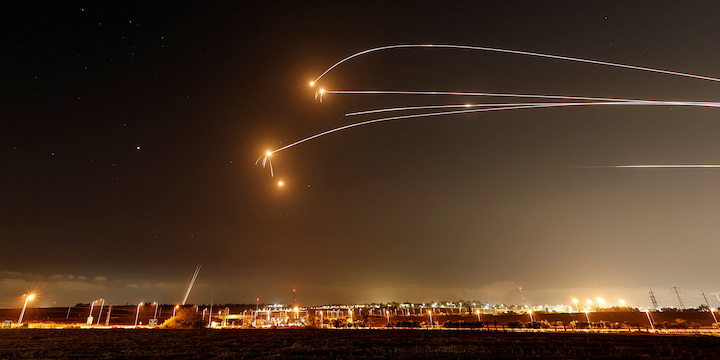
Israel’s Iron Dome anti-missile system intercepts rockets launched from the Gaza Strip, as seen from Sderot, Israel May 13, 2023 Photo: REUTERS/Ammar Awad
When people speak about Israel’s strength, they tend to reach for the familiar symbols: the Israel Defense Forces, the Air Force, Iron Dome, intelligence, cybersecurity, medical innovation, and a technology sector whose influence extends far beyond the country’s borders. All of these are essential to Israel’s security and success, yet after years of following Israel closely, visiting the country, and advocating for it from abroad, I have come to believe that one of its greatest strategic strengths receives remarkably little attention.
It is the ability to live normally in circumstances that are anything but normal.
This may sound almost trivial when discussing a nation that has faced wars, terrorism, rocket attacks, and repeated promises of destruction since its establishment. Yet terrorism has never been concerned solely with killing people. Its broader purpose is psychological. It seeks to make ordinary life unbearable, to make people afraid of buses, restaurants, schools, concerts, markets, and public spaces, and eventually to convince them that building a future is pointless.
Measured against that objective, Israel’s response is not found only on the battlefield. It is found in the decision to get back on the bus, reopen the restaurant, return children to school, celebrate another wedding, establish another company, and plan another summer while enemies continue predicting that Israel will not have one.
Foreign observers sometimes misunderstand this extraordinary Israeli normality. Images of crowded cafés, busy beaches, or nightlife continuing after terrible events can create the impression that the situation cannot possibly be as serious as Israelis claim. The opposite is often true. Those images do not demonstrate an absence of grief. They demonstrate a refusal to allow grief and fear to dictate the future.
A society does not defeat terrorism only by eliminating terrorists. It defeats terrorism when terrorists fail to determine how that society lives.
Israel understands this almost instinctively. Its people mourn intensely, and the names and faces of murdered civilians and fallen soldiers quickly become known across the country. Funerals can feel national in character, while the suffering of hostage families can become deeply personal to millions who have never met them. Israel remembers its dead, worries about its wounded, and carries trauma across generations, but it continues living because resilience is not the absence of pain. It is the decision that pain will not be given the final word.
You see that decision throughout Israeli society. Reservists return from military service and resume their studies or careers. Wounded soldiers begin rehabilitation while speaking about what they intend to do next. Farmers return to their fields. Entrepreneurs keep developing technology. Doctors continue treating patients. Musicians perform. Couples marry and families grow.
Israelis also continue arguing, loudly and relentlessly, about politics, religion, security, economics, and almost everything else. These divisions are frequently presented internationally as evidence of weakness, yet there is another way to understand them. Israelis argue passionately about their country because they assume there will be a country tomorrow worth arguing about. Political disagreement, however frustrating it can become, is also evidence of a society intensely invested in its future.
Much of the world rarely encounters this Israel because international audiences generally meet the country through breaking news. Israel becomes a succession of wars, terrorist attacks, diplomatic confrontations, and United Nations resolutions, while the daily reality of millions of people disappears behind the headlines.
Yet Israel is not a breaking news alert.
It is a country where children forget their homework, people fall in love, dogs are walked, families argue over dinner, commuters complain about traffic, young couples worry about housing prices, scientists conduct research, and entrepreneurs wonder whether their latest idea might become the next successful startup. Grandparents wait for their grandchildren to visit, someone receives terrible news while someone else receives wonderful news, and millions wake each morning expecting life to continue.
This ordinary Israel may actually tell us something profound about the purpose of the Jewish state. Israel was not established merely so Jews could survive. After centuries of persecution, survival alone would have been an extraordinarily limited ambition. Israel exists so that Jews can live as a sovereign people.
Living means producing art rather than merely escaping hatred. It means building universities rather than simply searching for refuge. It means developing medicines, growing food, writing books, creating businesses, raising families, and debating what kind of country the next generation should inherit.
Every ordinary Israeli morning therefore represents a quiet defeat for those who have spent generations predicting the disappearance of Jewish sovereignty. Every child entering an Israeli classroom contradicts them. Every new business, wedding, scientific discovery, and elderly Israeli sitting outside a café drinking coffee does the same.
None of this means that resilience should excuse political failures, security mistakes, or inadequate preparation. Israelis have every right to demand accountability from those entrusted with protecting them. Resilience should never become a substitute for competent leadership, but neither should it be overlooked simply because it lacks the drama of military power.
For decades, Israel’s enemies have declared the Jewish state temporary. They have promised its destruction and taught generations to believe that eventually Israel will disappear. Perhaps one of Israel’s most powerful answers is not another speech, military parade, or diplomatic declaration.
It is tomorrow morning.
The shutters rise, the buses move, children return to school, scientists enter laboratories, soldiers come home, and families make plans. Israelis work, argue, laugh, love, mourn, and begin again.
Israel survives because it knows how to defend itself.
Israel prevails because, despite everything, it refuses to stop living.
And that quiet determination may be one of the Jewish state’s most powerful weapons of all.
Sabine Sterk is CEO of Time To Stand Up For Israel.


