Why American Charedim Are Watching Israel’s Elections Closely
Error: Contact form not found.

 by Disa Sacks

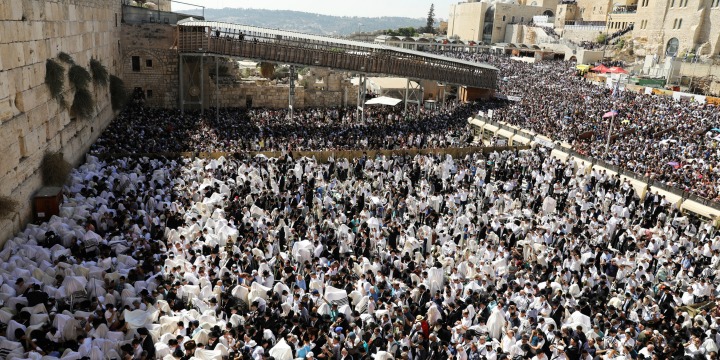
A general view shows thousands of Jewish worshipers attending the priestly blessing on the Jewish holiday of Sukkot at the Western Wall in Jerusalem’s Old City, Sept. 26, 2018. Photo: Reuters / Ammar Awad
American Charedim are watching the new election cycle in Israel with a mix of anxiety and hope. Many of us here feel invested in its success in a way that goes beyond ordinary interest in Israeli politics.
There is a reason for that. Antisemitism in America is growing sharper by the week, and more families than ever are seriously planning aliyah. At the same time, we can see clearly that the status quo for rank-and-file Charedim in Israel cannot continue. Too many families are trapped in poverty, and the toll on them is not an abstract policy problem. It is the daily reality of people we know, people we are related to, and people whose children may soon be our neighbors.
In America, the Charedi world has built something different. The vast majority of Charedi men and women work, and this has never been treated as a threat to a passionately frum life. Torah learning here is flourishing because of it. The same Torah sources are being learned in American yeshivas as in Israeli ones, and taught by many of the same rabbanim. So, when American Charedim look at Israel and see sweeping political edicts that keep rank-and-file families locked into poverty, and see fierce resistance to addressing the needs of the klal in the years since Oct. 7, the disconnect is impossible to ignore.
Most of us have stayed quiet about it publicly, for all sorts of understandable reasons. But the two Charedi worlds, separated by an ocean, remain deeply connected: spiritually, financially, and through family ties that run in both directions. Am Yisrael is one people. When Israel hurts, we feel it here too.
This is why change in the Charedi community in Israel is something that resonates so naturally with so many American Charedim. Concepts such as proper education that will give Charedim employable skills, adequate and respectable housing, and instituting policies and community mores that will help alleviate the poverty felt by many Charedi families in Israel, is of the utmost importance. Not in the future, but now.
Some values and priorities already shape how we live our own communal life. Israeli Charedi leadership needs to take a page out of the American Charedi leadership’s manual to build a community where Torah learning and earning a living support each other rather than compete.
To do this, the current Charedi leadership needs to change or allow new leadership to make the tough decisions that will ensure the future of a prosperous Charedi community in Israel — one that will not be insular, focused, and disassociated from the rest of Israel. That has been tried and has failed. The Charedi community in Israel is disliked — and at times even despised — by some people in Israel. Furthermore, many of the Charedi public are impoverished while their leaders are affluent and disconnected from those they claim to support. This needs to change.
People keep asking me the same question: How can American Charedim support Israeli Charedim without overstepping into Israeli politics that are not ours to run and without continuing to fuel a broken system?
I have three answers.
First, encourage family and friends in Israel to become active. Tell them to get involved in these upcoming elections, to speak up, and to vote for what is right, even when it feels uncomfortable; we must break from old, broken, and harmful patterns, especially in the post-Oct. 7 reality.
Second, ask Charedi rabbanim in your own community to say publicly that new parties that may offer practical solutions that are still within the realm of the Torah world are not a break from Charedi Torah values, but an expression of them. Hashkafah must follow halacha, not the reverse. The practical problems facing Charedi families in Israel can be solved, and the understanding that change is coming should give people confidence rather than trepidation. Torah and reality should not conflict.
Third, speak privately with relatives and neighbors who assume the current status quo is simply Daas Torah. Challenge that assumption directly and respectfully. It deserves to be examined, not assumed.
We can no longer afford to stay on the sidelines. The future of Am Yisrael, in Israel and in the Diaspora, depends on whether Charedi leadership rises to meet the needs of its own community. We should daven for the success of the Charedi public and community, and support proudly, openly, and with real conviction our fellow Charedim who are working to make the life of the Charedi public better. Anything less falls short of what the Torah asks of us.
The writer, Dr. Disa Sacks, grew up in Monsey, NY. She has been keenly concerned about the effects the Charedi issues are having in Israel. Since Oct. 7, she has been actively posting about it on X and Substack.