


El-Sayed Underperforms in Senate Primary Victory, Major Questions Linger Ahead of General Election
Error: Contact form not found.

 by Corey Walker

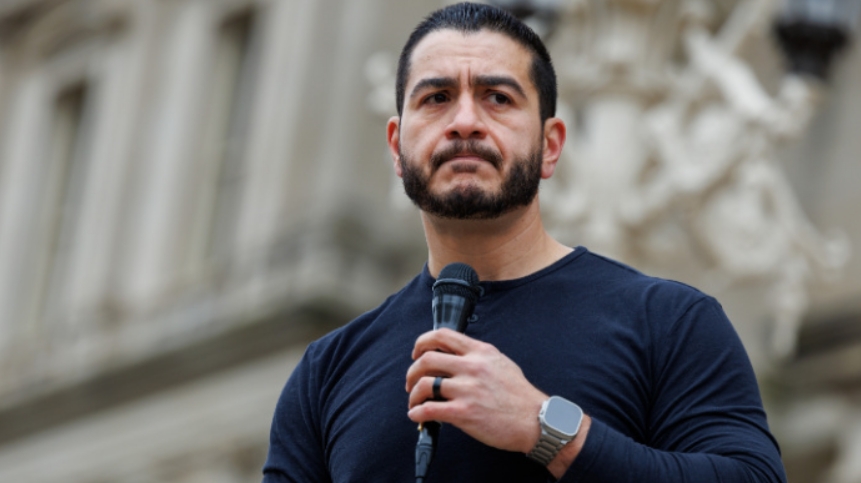
Progressive firebrand Abdul El-Sayed limped across the finish line on Tuesday night, winning the Michigan Democratic Senate primary competition by a far narrower margin than anticipated, raising electability concerns ahead of the general election.
El-Sayed thwarted Haley Stevens, a mainstream liberal, garnering 48.5 percent of votes compared to 47.5 percent, a margin of roughly 1 percent. Observers noted that El-Sayed’s victory was much less robust than originally anticipated, underperforming a slew of recent polling which showed the candidate winning by double-digits.
“This was always going to be the many versus the money, and tonight, we have shown that Michiganders want money out of politics, money in their pockets, and Medicare for all. We are building a coalition that is fired up and ready to go beat Mike Rogers,” Alia Kapasi, the El-Sayed campaign manager said in a statement.
El-Sayed, a Detroit-born physician, quickly established himself as the most anti-Israel candidate in the primary competition. He has accused Israel of genocide and apartheid, called it a “rogue state,” and argued that its government and the Hamas terrorist organization are both “evil.”
El-Sayed has campaigned alongside left-wing political streamer Hasan Piker, who endorsed his candidacy and appeared with him at events in Michigan. During one such appearance, El-Sayed denounced the American Israel Public Affairs Committee and accused it of influencing lawmakers to support the war against Iran.
He has also questioned US support for maintaining Israel as a specifically Jewish state, stating that there is no interpretation of a Jewish state that can be compatible with liberal values. He also sparked anger by asserting that the only reason a Democrat could support Israel is because of money, and that it is impossible for a Democrat to support Israel and believe in “human rights.”
“Know that the billionaires, corporations, and the special interests-they weren’t going to give up light. We all knew they were going to spend their money,” El-Sayed said on Tuesday night. “We didn’t know they were going to spend $70 million of their money. We didn’t know that they were going to outspend us $11 to $1. And yet we’re still standing.”
El-Sayed dominated Stevens among highly-affluent, college educated, and disproportionately white towns such as Ann Arbor and Grand Rapids. Meanwhile, Stevens throttled El-Sayed in rural, working class, and majority black towns such as Detroit and its surrounding suburbs. The results are reflective of a broader trend in which progressive candidates struggle to find traction in non-white and lower-income areas.
A Politico analysis of county-level results highlighted the class divide between the standard El-Sayed and Stevens voters. El-Sayed romped among higher-income and college-educated voters, carrying 58.4 percent in counties where at least 30 percent of adults possessed a bachelor’s degree. Conversely, Stevens succeeded in lower-income areas and maintained 51.4 percent of the vote in counties with lower education rates.
Party insiders, such as Matt Bennett, co-founder of Third Way, a Democratic think-tank committed to political moderation, speculated that Stevens’s refusal to adopt in anti-Israel rhetoric or policies, and her acceptance of funds from the America Israel Public Affairs Committee (AIPAC) served a significant liability in her campaign. AIPAC funneled a staggering $60 million into the Stevens campaign, according to reports, resulting in a campaign spend that outstripped El-Sayed by a roughly 11-to-1 margin.
“They’ve made some very, very bad strategic decisions,” Bennett said of AIPAC. “And all of that combined has led to just a real toxicity.”
In his victory speech, El-Sayed also vowed to protect Michigan Jews. “To all of my sisters and brothers of the Jewish faith… I want you to know that… my commitment to Jewish safety is the same commitment that I have to the safety of my own daughters.”
In a subsequent interview, El-Sayed also called Israel “bloodthirsty.”
As El-Sayed moves ahead to the general election against staunch Conservative Republican Mike Rogers, CNN election analyst Harry Enten suggested that his soft performance among black, rural, and working class voters might foreshadow a rough election night for the progressive insurgent. He noted that El-Sayed performed “very poorly” among regions of the state that are defined by populations which are disproportionately black, lower-income, or sparsely populated.
Recent polling showed El-Sayed trailing Rogers by a narrow margin in a hypothetical general election showdown with Rogers. Far-left candidates have struggled in statewide races, competitions which usually require appeal across large segments of the electorate. However, experts suggest that unless he moderates his views he will struggle to win a general election.
“Abdul El-Sayed squeaked out a win in Michigan, far short of the double-digit margin the left projected. He now has work to do—particularly with working-class voters. He dug himself a general election hole running as an extremist. If he wants to win, he must stop digging,” wrote Third Way, a Democratic Party think tank committed to ideological moderation.
In particular, Third Way suggested that El-Sayed “Denounce the DSA.”
“He should make clear that not only is he not a member, but he also rejects their extremist platform and ideas, and doesn’t want them out campaigning for him,” they continued, adding that El-Sayed should “commit to Israel’s right to exist.”
The DSA, the largest socialist organization in the US which counts members of the US Congress among its ranks, has previously opposed US military aid to Israel and supported the boycott, divestment, and sanctions (BDS) movement against the Jewish state. The substantial amount of the group’s members are self-identified communists, according to reporting by Manhattan Institute and support a radical variety of policy positions such as abolishing the Supreme Court, Senate, and the presidency.
“I spent years hunting terrorists and bringing Osama bin Laden to justice. Never in a million years did I think that I would be running against someone who believes America deserved 9/11,” he wrote in a statement.
“He wants to empty prisons and put murderers and sex offenders back on our streets. He pledged his support to the Muslim Brotherhood and campaigns with people who refuse to condemn terrorism,” he continued.
AIPAC also issued a statement claiming that the organization would continue its involvement into the general election.
“Our members remain determined to ensure that voters reject Dr. El-Sayed and his radical anti-Israel agenda in November,” AIPAC wrote.
El-Sayed’s political ascendance comes as the Democratic Party has soured on Israel. A commanding majority of Democrats believe that Israel has committed a so-called “genocide” in Gaza and a staggering majority express more “sympathy” with Palestinians over Israelis. Consequently, Democratic lawmakers have started to distance themselves from Israel, announcing that they will no longer collaborate with AIPAC and voting against aid packages to Israel in larger numbers.
Though many party activists, such as the Democratic Socialists of America (DSA) and Hasan Piker sought to use the results of the Michigan Senate primary as a bellwether for the future direction of the Democratic Party, the thinner-than-expected margins raised a lot of skepticism whether the Democratic base has completely coalesced around far-left politics.


