



Israel’s Campaign Against Hamas’s Vast Tunnel Network Continues During Gaza Ceasefire, Kan Reports
Error: Contact form not found.

 by Algemeiner Staff

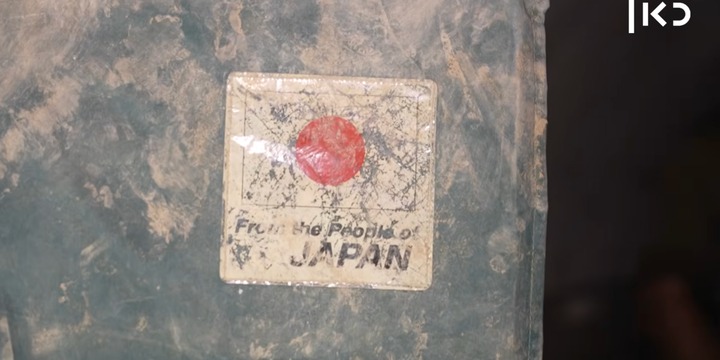
A mattress bearing the words “From the People of Japan,” originally supplied as humanitarian aid, was found inside a Hamas commander’s underground room in Gaza. Photo: Screenshot/Kan.
Israeli forces are continuing to uncover and destroy Hamas tunnels inside the Gaza Strip during the ceasefire, carrying out a slow underground campaign in territory behind the Yellow Line, according to a new report by Israel’s Kan public broadcaster.
The episode of Kan’s documentary series Dokotayim follows Lt. Col. Y., one officer overseeing the Israeli military’s effort to dismantle Hamas’s subterranean network in southern Gaza. Moving with troops through shafts, passageways, and underground rooms, the report provides a rare look at work that has continued largely out of public view since major fighting subsided.
The ceasefire may have changed the pace of operations above ground, but beneath areas controlled by the Israel Defense Forces, soldiers are still finding sections of what Israeli officials call the “Gaza metro” — a network so extensive that Israeli forces have yet to establish its full dimensions.
Such work, the episode shows, is painstaking and methodical. Troops must locate entrances, determine where tunnels lead, map their branches, search for explosives and weapons, and then destroy them in a way that prevents Hamas from returning to repair and reuse them.
A tunnel shaft, Israeli officials explain in the video, is often only the beginning. Routes can stretch beneath neighborhoods, split into several directions, and connect fighting positions, storage rooms, command centers, and living quarters, according to the Israeli military. Many were built to keep Hamas operatives underground for long periods, according to media reports and IDF handouts.
In one tunnel shown by Kan, the soldiers enter what Lt. Col. Y. identifies as a Hamas commander’s room. It is more than a hollowed-out chamber. The space has porcelain sinks, telephone wiring, electricity, and a bed fitted with a mattress supplied as humanitarian aid “from the people of Japan.”
The mattress, the show narrator points out, had not reached a displaced Gaza family or civilian shelter. It was underground, inside infrastructure used by Hamas.
Japan supplied UNRWA with thousands of sleeping mats and blankets for displaced Gazans in early 2024, although Kan did not establish whether the mattress came from that specific shipment.
The small discovery fits a much larger pattern Israel has documented for years in which civilian goods and reconstruction materials enter Gaza and later appear within Hamas’s vast military network. Israeli officials have repeatedly accused the terrorist organization of diverting cement, steel, wood, fuel, food, and other resources intended for Gaza’s population.
The room shows how far Hamas’s tunnel project extended beyond digging passages for fighters. Senior operatives were given places where they could sleep, wash, communicate, and direct operations while remaining underground for days or weeks. Israeli and international media reports have shown that other tunnel complexes uncovered during the war have contained bathrooms, kitchens, electrical rooms, ventilation systems, and weapon stores.
Hamas leader Yahya Sinwar said in 2021 that the network ran for roughly 500 kilometers, or 310 miles — nearly the length of the New York City subway system, beneath a territory only about twice the size of Washington, DC. Israeli assessments produced during the war later placed the network even higher, at hundreds of miles.
After the 2014 Gaza war, an international monitoring system was established to allow construction materials into the territory while preventing their use by Hamas. Israeli defense officials later concluded that the mechanism had failed to stop large amounts of cement and metal from reaching the tunnel project.
Israeli forces have spent years operating in Gaza and are still finding new shafts. In 2025 IDF international spokesman Lt. Col. Nadav Shoshani said dozens of shafts remained in a single sector and that troops were dismantling only “single digits” each week.
Even in Rafah, where Israeli forces had already been operating for more than a year, tunnels are still being discovered.
“The IDF are world-class experts in dealing with terror tunnels,” Shoshani said. “And still, after a year plus in Rafah, there are still tunnels.”