


The Hidden Skills Inside Jewish Communal Life
Error: Contact form not found.

 by Josh Gottesman

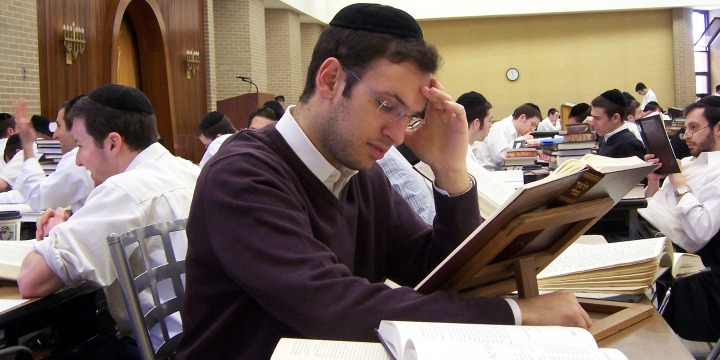
A yeshiva student. Photo: Wikimedia Commons.
When I was in college, I remember sitting down to write my first resume and trying to make my work experience sound more impressive.
One of my jobs was cleaning floors at a kosher candy store. But “janitor” didn’t sound particularly exciting to a college student trying to land an internship.
So I gave myself a new title: Floor Manager.
Technically, it wasn’t a lie. I managed the floors. I swept them, mopped them, and made sure they looked presentable every day.
The title didn’t get me the job.
But the experience taught me something that has stayed with me throughout my career: people often struggle to describe what they actually learned from an experience.
Years later, I had the opportunity to speak at SHRM Talent 2026 on a panel titled “Skills-First at Scale: What Actually Works and What Doesn’t.” The conversation centered on a growing movement in the workforce that encourages organizations to look beyond degrees, titles, and resumes and focus instead on the actual skills people bring to the table.
And as I listened to the discussion, I couldn’t help but think about the Jewish community.
SHRM, the Society for Human Resource Management, is one of the largest organizations in America focused on HR and talent. Their talent conference brings together approximately 3,000 leaders from across industries to discuss how hiring and workforce development are evolving.
The skills-first movement is a growing trend in the workforce that encourages organizations to focus less on credentials alone and more on the actual skills a person brings to the table.
Instead of focusing only on where someone went to school or what company they worked for, employers are increasingly looking beyond degrees, titles, and resumes to understand what someone is truly capable of doing. And this is where I believe the Jewish community has a real advantage.
We may be better positioned for this shift than we realize, but only if we learn how to recognize, develop, and articulate the skills we are already building.
Many people in our community develop meaningful skills through nontraditional paths. Years in yeshiva, teaching, camp, and communal work often build strong foundational and transferable skills.
The issue is not whether these experiences create skills. They often do.
The issue is whether we know how to identify them clearly and apply them beyond the context in which they were developed.
One of the frameworks I developed through my work in talent development is what I call The Talent Common Denominator.
The idea is simple: beneath the unique technical requirements of almost every job is a shared layer of foundational and transferable skills. Different roles may require different expertise, but many depend on the same underlying abilities — communication, problem-solving, relationship-building, critical thinking, leadership, and adaptability.
Across very different roles, there is a shared layer of capability underneath. Every job has unique technical requirements. But many rely on the same core abilities that show up again and again.
If we strengthen those foundational and transferable skills, we become more effective in our current roles and more prepared for what comes next.
But this goes deeper than learning how to make experiences sound impressive on paper. It is about learning how to recognize the real skills you have developed, communicate them clearly, and apply them confidently in different settings. This affects how you talk about yourself in an interview, how you explain your experience in a cover letter, and how you show up once you are on the job.
Here are a few practical ways to start:
1. Read job descriptions differently
Instead of looking only at job titles or industry experience, pay closer attention to the tasks and responsibilities listed in the role.
Ask yourself: What skills would someone need to succeed at these responsibilities?
If a role requires managing competing priorities, handling difficult conversations, analyzing information, coordinating projects, or building relationships, think about where you may have already developed those abilities, even outside of traditional work environments.
Once you identify those skills, your resume, cover letter, and interviews should reflect them clearly.
2. Start identifying the skills you already have
Many people overlook skills they developed in nontraditional settings because they do not think those experiences “count.”
But skills developed through yeshiva, camp, teaching, volunteer work, communal leadership, or other life experiences are often very real and very transferable.
Someone who organized a large community event may have developed project coordination and operational problem-solving skills. Someone who spent years learning in a chavrusa may have strengthened their skills in analytical thinking, active listening, and the ability to process complex information.
The setting may be different, but the skill itself is often highly valuable.
3. Learn how to articulate those skills clearly
A major part of succeeding in a skills-first world is learning how to communicate your experiences through the lens of capability, not just titles or environments.
This is not about exaggerating experiences. It is about learning how to explain them accurately and confidently.
The takeaway from the conversation at SHRM Talent is not that higher education degrees no longer matter. It is that organizations are being more intentional about understanding what people can actually do.
The Jewish community already develops many of these capabilities in powerful ways. The next time someone says, “I only worked in camp,” “I spent years learning in yeshiva,” or “Most of my experience comes from community work,” I hope they’ll see those experiences differently.
The question isn’t whether those experiences built valuable skills. The question is whether we’ve learned how to recognize and articulate them.
In many cases, the skills employers are searching for today may be the very same skills our community has been developing all along.
Josh Gottesman is the Chief Human Resources Officer at the Orthodox Union.